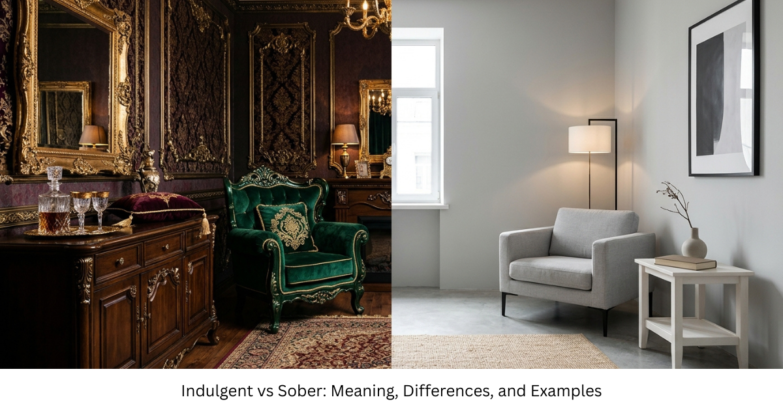
Have you ever wondered why one person enjoys life’s pleasures without worrying too much, while another prefers a more restrained, practical, and measured approach? The words indulgent and sober can help describe these contrasting attitudes. Understanding indulgent vs sober makes it easier to choose the right word when describing someone’s personality, behavior, decisions, or lifestyle.
Although these terms can sometimes appear to be opposites, their meanings depend on the context. An indulgent person may be generous, forgiving, or willing to enjoy life’s comforts, while a sober person may be serious, restrained, or realistic. In certain situations, sober also means not being under the influence of alcohol or other intoxicating substances.
Let’s explore their definitions, differences, practical examples, and common uses so you can understand exactly when to use each word.
What Does Indulgent Mean?
The word indulgent describes someone who allows themselves or others to enjoy pleasures, receive special treatment, or get away with things that might usually be restricted.
An indulgent person may prioritize comfort, enjoyment, generosity, or emotional satisfaction over strict rules and limitations. Depending on the situation, this quality can be positive or negative.
Examples of Indulgent Behavior
Here are a few everyday examples:
- Food: Someone who enjoys rich desserts and treats themselves to their favorite meals may have an indulgent attitude toward food.
- Parenting: A parent who regularly lets their children stay up late or buy toys without setting firm limits may be described as indulgent.
- Shopping: A person who frequently purchases luxury items simply because they enjoy them may have an indulgent lifestyle.
- Relationships: Someone who forgives a loved one repeatedly and overlooks minor mistakes may be described as indulgent toward that person.
- Self-care: Taking a long spa day, enjoying an expensive meal, or spending a relaxing weekend at a resort can be considered indulgent activities.
Is Being Indulgent Good or Bad?
Being indulgent is not necessarily a negative trait. Allowing yourself to relax, enjoy a special meal, or celebrate an achievement can contribute to a balanced and satisfying life.
Problems may arise when indulgence becomes excessive. For example, repeatedly overspending, ignoring responsibilities, or giving children everything they want without boundaries can lead to unwanted consequences.
In other words, indulgence can represent generosity and enjoyment, but it can also suggest a lack of restraint.
What Does Sober Mean?
The word sober has several meanings, depending on the context in which it is used.
Its most familiar meaning is being free from the effects of alcohol or other intoxicating substances. However, it can also describe a serious, sensible, restrained, or realistic attitude.
A sober person may focus on facts rather than emotions, carefully consider the consequences of a decision, and avoid unnecessary excess.
Examples of Sober Behavior
Consider these situations:
- Decision-making: Someone who carefully evaluates the risks before investing money is taking a sober approach.
- Personality: A serious individual who rarely jokes in professional situations may be described as sober.
- Lifestyle: A person who avoids alcohol and chooses to live without intoxicating substances may describe themselves as sober.
- Financial planning: Someone who creates a realistic budget and avoids unnecessary spending demonstrates sober judgment.
- Assessment: A manager who examines a project’s weaknesses honestly instead of focusing only on its potential success is making a sober assessment.
Does Sober Always Mean Serious?
No. Although sober can describe a serious or restrained person, it does not always mean someone is unhappy, unfriendly, or emotionally distant.
For instance, a person can be cheerful, humorous, and sociable while remaining sober in the sense of not consuming alcohol. Similarly, a sober assessment can be calm and objective without being pessimistic.
The context determines the intended meaning.
Indulgent vs Sober: Key Differences
The main difference between these words is the attitude they express. Indulgent generally emphasizes pleasure, leniency, or permission, whereas sober emphasizes restraint, seriousness, or clear judgment.
| Feature |
Indulgent |
Sober |
| Basic meaning |
Allowing or enjoying pleasures |
Restrained, serious, or clear-headed |
| General attitude |
Comfort-seeking or permissive |
Measured or realistic |
| Decision-making |
May prioritize immediate satisfaction |
Often emphasizes consequences |
| Spending habits |
May favor treats and luxuries |
May favor careful budgeting |
| Parenting |
More permissive or lenient |
May emphasize rules and boundaries |
| Emotional tone |
Often warm, generous, or pleasure-oriented |
Often serious, calm, or practical |
| Alcohol-related meaning |
Not inherently related to drinking |
Not under the influence of alcohol or other intoxicants |
These differences are general rather than absolute. An indulgent person can make sensible decisions, and a sober person can enjoy luxuries. The words describe particular qualities or circumstances, not someone’s entire personality.
Indulgent vs Sober in Everyday Life
Understanding the definitions is helpful, but real-life situations make the distinction even clearer.
1. Food and Eating Habits
Imagine someone who orders their favorite dessert after dinner, even when they are already full. This could be described as an indulgent choice because the person is prioritizing enjoyment.
A more restrained approach might involve choosing a portion that fits their appetite or deciding to save the dessert for another occasion.
However, eating dessert does not automatically make someone indulgent in a negative sense. Enjoying food can be part of a balanced lifestyle.
2. Money and Spending
An indulgent shopper might buy an expensive watch as a spontaneous reward. Someone taking a sober approach to finances might compare prices, check their budget, and consider whether the purchase is necessary.
Neither approach is automatically right or wrong. Treating yourself occasionally can be enjoyable, while careful financial planning helps protect long-term goals.
The important distinction is whether the decision reflects thoughtful priorities or uncontrolled spending.
3. Parenting and Relationships
An indulgent parent may allow a child to skip chores because they want the child to remain happy. A parent who takes a more restrained approach may establish clear expectations while still showing affection.
In relationships, indulgence may mean being patient and forgiving. A sober approach might involve recognizing recurring problems and discussing realistic solutions.
Healthy relationships often benefit from both compassion and boundaries.
4. Work and Professional Decisions
In a workplace, an indulgent manager might approve frequent exceptions to company rules or allow employees to miss deadlines without consequences.
A manager taking a sober approach would evaluate the circumstances, consider the impact on the team, and apply reasonable standards consistently.
A good manager can still be flexible and understanding. Being practical does not require being harsh, just as being generous does not require ignoring accountability.
5. Lifestyle and Personal Choices
An indulgent lifestyle may involve frequent holidays, luxury purchases, fine dining, and other pleasurable experiences.
A restrained lifestyle may prioritize simplicity, saving money, routine, or long-term goals.
Neither lifestyle is universally superior. The best choice depends on personal values, financial circumstances, responsibilities, and individual preferences.
Indulgent vs Sober as Personality Descriptions
When used to describe personality, these words emphasize different tendencies rather than fixed personality types.
An indulgent individual may be:
- Generous with gifts, time, and attention.
- Forgiving when other people make mistakes.
- Enthusiastic about comfort and enjoyment.
- Less strict about rules and restrictions.
- Inclined to reward themselves or others.
A person described as sober may be:
- Serious when dealing with important matters.
- Practical when evaluating choices.
- Restrained in their behavior or presentation.
- Focused on facts and realistic expectations.
- Careful about consequences and responsibilities.
These characteristics are not mutually exclusive. Someone can be generous toward friends while remaining practical with money. Another person can have a serious professional manner while enjoying an indulgent holiday.
It is more accurate to treat these words as descriptions of particular behaviors than as complete definitions of someone’s character.
Synonyms and Antonyms
Knowing related words can help you use both terms more accurately in writing and conversation.
Synonyms for Indulgent
Depending on the context, synonyms include:
- Lenient
- Permissive
- Generous
- Forgiving
- Tolerant
- Self-indulgent
- Pleasure-seeking
These words are not always interchangeable. For example, generous emphasizes giving, while self-indulgent often suggests prioritizing personal pleasure.
Common antonyms: Strict, disciplined, restrained, self-controlled, and austere.
Synonyms for Sober
Depending on the intended meaning, synonyms include:
- Serious
- Sensible
- Practical
- Level-headed
- Clear-headed
- Restrained
- Realistic
When referring specifically to alcohol, abstinent may describe someone who avoids drinking, while unintoxicated describes a state of not being under the influence.
Common antonyms: Intoxicated, frivolous, excessive, carefree, or extravagant, depending on the context.
Note that sober does not have one universal opposite. Its antonym changes according to whether it refers to substance use, personality, judgment, or style.
How to Use Indulgent and Sober in Sentences
The following examples show how these words work naturally in everyday English.
Sentences With Indulgent
- Her indulgent grandparents bought her a new toy every time she visited.
- After completing a demanding project, he treated himself to an indulgent weekend at a luxury hotel.
- The manager was indulgent toward new employees who were still learning the process.
- An indulgent approach to shopping can become expensive if it is not balanced with budgeting.
- She enjoys an indulgent dessert occasionally without feeling guilty about it.
Sentences With Sober
- We need a sober assessment of the project’s financial risks before making a decision.
- He remained sober throughout the evening and drove his friends home.
- Her sober attitude helped the team focus on practical solutions.
- The report offered a sober account of the challenges facing the business.
- Despite the exciting opportunity, they made a sober decision after reviewing the costs.
These examples demonstrate that the words can describe behavior, judgment, lifestyle, and specific circumstances.
Common Mistakes When Using These Words
Although both words are straightforward, a few common misunderstandings are worth avoiding.
Mistake 1: Assuming Indulgent Always Means Excessive
Indulgence can involve reasonable pleasures or kindness toward others. The word becomes more negative when it suggests overdoing something or ignoring necessary limits.
Mistake 2: Assuming Sober Means Unhappy
A sober person can be cheerful, outgoing, and relaxed. When describing personality, the word generally refers to seriousness or restraint rather than a lack of happiness.
Mistake 3: Treating Sober as the Direct Opposite of Indulgent
These terms overlap in some situations, particularly when discussing restraint and excess, but they are not exact antonyms.
For example, someone who enjoys luxury holidays can still make sober financial decisions. Likewise, a person who does not drink alcohol can still have an indulgent attitude toward food or shopping.
Mistake 4: Ignoring Context
The meaning of sober changes significantly between sentences such as “He remained sober at the party” and “She offered a sober analysis of the economy.”
Always consider the surrounding words before choosing a definition.
Frequently Asked Questions
1. What is the main difference between indulgent and sober?
Indulgent describes allowing or enjoying pleasures, being permissive, or showing leniency. Sober can describe being free from intoxication or having a serious, restrained, and realistic attitude.
2. Is indulgent the opposite of sober?
Not exactly. They can contrast when discussing restraint and excess, but they are not direct opposites in every context. Restrained, disciplined, or self-controlled may be more precise opposites of indulgent.
3. What is an example of an indulgent person?
An indulgent person might regularly buy themselves luxury items, let their children have extra treats, or forgive a friend’s minor mistakes. The word can indicate generosity or excessive permissiveness, depending on the circumstances.
4. What does sober mean in simple words?
In simple terms, sober can mean not being under the influence of alcohol or other intoxicating substances. It can also mean serious, sensible, practical, or realistic.
5. Can someone be both indulgent and sober?
Yes. A person can enjoy expensive meals, travel, and other luxuries while remaining clear-headed and making sensible decisions. One word describes their enjoyment or permissiveness, while the other may describe their judgment or substance-use status.
6. What is the difference between indulgent and permissive?
Both words can describe allowing behavior that might otherwise be restricted. However, indulgent can also refer to enjoying personal pleasures or treating oneself, whereas permissive more directly emphasizes allowing others freedom or fewer restrictions.
7. What is the difference between sober and restrained?
Sober can refer to sobriety from intoxicating substances, seriousness, or sound judgment. Restrained specifically suggests keeping behavior, emotions, spending, or expression within limits.
8. Is an indulgent lifestyle bad?
Not necessarily. Enjoying life’s pleasures can support relaxation and personal satisfaction. It may become problematic when spending, eating, or other behaviors interfere with health, finances, responsibilities, or personal goals.
9. What are the best synonyms for indulgent and sober?
For indulgent, useful alternatives include lenient, permissive, generous, and self-indulgent. For sober, suitable alternatives include serious, sensible, practical, level-headed, and clear-headed. Choose the synonym that matches the intended meaning.
10. How can I remember the difference?
Think of indulgent as allowing or enjoying a pleasure, and sober as being clear-headed, serious, or restrained. Then check the context to determine which meaning fits the sentence.
Conclusion
Understanding indulgent vs sober comes down to recognizing the difference between pleasure or permissiveness and restraint or clear judgment. An indulgent approach may reflect generosity, comfort, and enjoyment, while a sober approach often emphasizes practicality, seriousness, and thoughtful decisions.
Neither quality is automatically better than the other. Enjoying life’s pleasures can be perfectly reasonable, and taking a practical approach does not mean avoiding fun. The key is to understand what each word communicates in context and use it to express your meaning accurately.
Whether you are improving your vocabulary, writing an article, or choosing the right word for a conversation, remembering these distinctions will help you communicate more clearly and confidently.