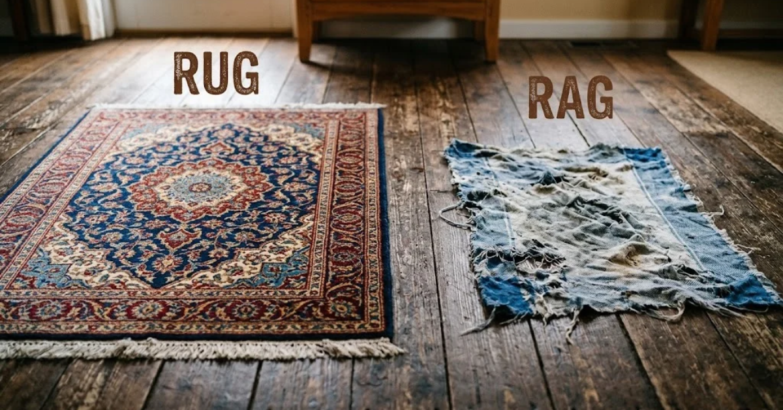
Have you ever wondered whether a rug and a rag are actually the same thing? Although these two words look and sound somewhat similar, they describe very different household items. Understanding rug vs rag can help you avoid confusion, improve your vocabulary, and use both words correctly in everyday conversations and writing.
A rug is generally a piece of fabric or woven material used to cover part of a floor, add comfort, or improve a room’s appearance. A rag, on the other hand, is usually an old or unwanted piece of cloth used for cleaning, wiping, polishing, or other practical tasks.
While both can be made from fabric, their purpose, appearance, condition, and everyday usage are quite different. Let’s explore these differences in detail, along with examples, common expressions, and helpful tips for remembering which word to use.
Rug vs Rag: What’s the Main Difference?
The biggest difference between a rug and a rag is their intended purpose.
A rug is a decorative or functional floor covering. It is often manufactured using materials such as wool, cotton, nylon, polyester, or synthetic fibers. Rugs are commonly placed in living rooms, bedrooms, kitchens, and hallways to provide comfort, protect flooring, or enhance interior design.
A rag is generally a piece of old, torn, or leftover fabric. People commonly use rags for household cleaning, wiping surfaces, polishing furniture, washing vehicles, and handling messy jobs.
Here’s a quick comparison:
| Feature |
Rug |
Rag |
| Meaning |
A floor covering |
A piece of cloth |
| Main purpose |
Decoration and floor protection |
Cleaning and wiping |
| Appearance |
Usually designed and finished |
Often plain, worn, or irregular |
| Material |
Wool, cotton, nylon, polyester, etc. |
Cotton, linen, microfiber, or other fabric |
| Common location |
Floors and living spaces |
Kitchens, garages, workshops |
| Typical condition |
New or well-maintained |
Often old or leftover |
| Cost |
Can be inexpensive or expensive |
Usually inexpensive or reusable scrap fabric |
In simple terms, a rug is something you put on the floor, while a rag is something you commonly use to clean or wipe surfaces.
What Is a Rug?
A rug is a piece of textile material designed primarily to cover a section of a floor. Unlike wall-to-wall carpeting, which generally covers an entire room or a large continuous area, a rug is typically a separate floor covering that can be moved or replaced.
Rugs come in countless shapes, sizes, patterns, colors, and materials. Some are manufactured for practical purposes, while others are designed mainly to complement a home’s interior.
Common Types of Rugs
There are several types of rugs available for different household needs.
1. Area rugs
<text> </text>
<escape></escape>
Area rugs are decorative floor coverings designed to occupy a specific section of a room. They are popular in living rooms, dining areas, and bedrooms.
2. Doormats and entryway rugs
These rugs are placed near entrances to collect dirt, moisture, and debris from shoes before people enter a home.
3. Runner rugs
Runner rugs are long and narrow. They are commonly used in hallways, kitchens, and staircases.
4. Bathroom rugs
Bathroom rugs provide a softer surface underfoot and can help absorb water near showers, bathtubs, and sinks.
5. Handmade rugs
Handmade rugs are produced using techniques such as hand-knotting, hand-tufting, or weaving. Depending on their materials and craftsmanship, some can be valuable decorative or collectible items.
What Materials Are Used to Make Rugs?
Rugs can be made from natural or synthetic materials, including:
- Wool: Durable, naturally insulating, and comfortable underfoot.
- Cotton: Lightweight, relatively easy to clean, and commonly used in casual rugs.
- Nylon: A synthetic fiber known for its durability and resistance to wear.
- Polyester: Often used for its softness and color retention.
- Jute: A natural plant fiber commonly used in textured, rustic-style rugs.
- Silk: A luxurious material used in certain decorative and traditional rugs.
The choice of material affects a rug’s appearance, price, durability, and maintenance requirements.
What Is a Rag?
A rag is a piece of cloth, usually made from fabric that is no longer needed for its original purpose. It may come from an old T-shirt, towel, bedsheet, cotton garment, or other textile item.
Rather than throwing away worn-out clothing, people often cut it into smaller pieces and reuse it as a cleaning cloth.
Rags are especially useful because they provide a simple and inexpensive way to handle everyday cleaning tasks.
Common Uses of Rags
Rags have many practical applications around homes, garages, workshops, and workplaces.
Some common uses include:
- Cleaning surfaces: Wiping kitchen counters, tables, and shelves.
- Dusting furniture: Removing dust from cabinets, desks, and other objects.
- Polishing: Applying polish to wooden furniture, shoes, or metal surfaces.
- Car maintenance: Cleaning vehicle interiors and wiping away grease.
- Painting projects: Cleaning brushes, removing spills, and preparing surfaces.
- Gardening: Wiping tools and handling small cleanup jobs.
- DIY projects: Using fabric scraps for crafts, stuffing, or other household purposes.
Not every rag is dirty or damaged. Some are clean, freshly cut pieces of fabric kept specifically for cleaning or other practical uses.
Different Types of Rags
Depending on their material and intended use, rags can serve different purposes.
Cotton rags: These are commonly made from old cotton clothing or towels. They are absorbent and useful for general cleaning.
Microfiber rags: These are designed to trap dust and remove dirt effectively. They are commonly used for cleaning glass, electronics, and delicate surfaces.
Terry cloth rags: Usually made from old towels, these have a looped texture that helps absorb moisture.
Industrial rags: These are used in workshops, factories, and mechanical environments for handling oil, grease, and other substances.
Rug vs Rag: Differences in Everyday Examples
Understanding definitions is helpful, but examples make the difference even easier to remember.
Consider the following sentences:
Examples of Rug
- “I bought a beautiful rug for my living room.”
- “Please remove your shoes before stepping on the white rug.”
- “The bedroom rug makes the floor feel warmer.”
- “We placed a small rug near the front door.”
- “She chose a wool rug to complement the furniture.”
In these sentences, rug refers to a floor covering used for decoration, comfort, or practical purposes.
Examples of Rag
- “Use an old rag to clean the kitchen counter.”
- “He wiped the oil spill with a cotton rag.”
- “I keep a few rags in the garage for cleaning tools.”
- “She used a rag to remove dust from the table.”
- “The mechanic cleaned the engine parts with a rag.”
Here, rag refers to a piece of cloth used for wiping, cleaning, or handling materials.
Is a Rag Ever Used as a Rug?
Yes. Although rugs and rags have different meanings, there is some overlap between them.
For example, a rag rug is a type of rug traditionally made by weaving, braiding, or otherwise joining strips of leftover fabric. These fabric strips may come from old clothing, bedsheets, or other textile materials.
Rag rugs are often associated with traditional handmade crafts and practical home decoration. They turn unwanted fabric into something useful and attractive.
This is an important distinction: a rag rug is a floor covering made from fabric scraps, not simply a cleaning rag placed on the floor.
What Is a Rag Rug?
A rag rug is a handmade or manufactured floor covering made using pieces or strips of fabric. It is a good example of how old textiles can be reused instead of being thrown away.
Traditional rag rugs were often made at home using leftover materials, making them an economical option for households.
How Are Rag Rugs Made?
The exact process depends on the design, but common methods include:
- Collecting fabric: Gather old cotton shirts, bedsheets, towels, or other suitable textiles.
- Preparing the material: Wash and dry the fabric before cutting it into strips.
- Cutting or tearing: Create fabric strips of relatively consistent width.
- Joining the strips: Sew, braid, crochet, or weave the pieces together.
- Finishing the rug: Secure loose ends and trim uneven sections.
Rag rugs can be colorful, practical, and environmentally useful because they give discarded textiles a second purpose.
Rug vs Rag: Are They Pronounced Differently?
Yes. Although the words share some similar sounds, their vowels are different.
- Rug: Pronounced “rug,” with a short u sound, similar to the vowel in “sun.”
- Rag: Pronounced “rag,” with a short a sound, similar to the vowel in “cat.”
In phonetic notation, their common pronunciations are:
The difference is mainly in the vowel sound. Paying attention to this distinction can help English learners recognize and pronounce the words correctly.
Is Rug or Rag More Appropriate in Different Situations?
Choosing the correct word depends on what you’re describing.
Use rug when talking about:
- A decorative floor covering.
- A small textile placed in a living room.
- A carpet-like covering under furniture.
- A handmade fabric floor covering.
- A mat or runner used in a hallway.
Use rag when talking about:
- An old piece of clothing used for cleaning.
- A piece of fabric used to wipe a surface.
- Leftover material from sewing or crafting.
- A cloth used in a garage or workshop.
- Fabric scraps used to make a rag rug.
For example, saying “I cleaned the floor with a rug” may be confusing if you actually mean a cleaning cloth. In that situation, “I cleaned the floor with a rag” is more appropriate.
Common Expressions and Phrases Using Rug and Rag
Both words appear in everyday English expressions, although they are used in different ways.
Common Expressions With Rug
Pull the rug out from under someone: To suddenly remove someone’s support or put them in a difficult situation.
Example: “The company pulled the rug out from under its employees by canceling the project unexpectedly.”
Sweep something under the rug: To hide a problem instead of addressing it.
Example: “You cannot simply sweep financial mistakes under the rug.”
Common Expressions With Rag
Rags to riches: A phrase describing someone who rises from poverty or difficult circumstances to wealth or success.
Example: “Her story is a classic rags-to-riches journey.”
Rag on someone: To criticize, tease, or repeatedly make fun of someone.
Example: “His friends always rag on him about his old car.”
In rags: Wearing very old, worn-out, or shabby clothing.
Example: “The fictional character was described as living in poverty and dressed in rags.”
These expressions demonstrate that both words have meanings beyond their basic household definitions.
Frequently Asked Questions About Rug vs Rag
1. What is the main difference between a rug and a rag?
A rug is a textile floor covering used for decoration, comfort, or floor protection. A rag is a piece of cloth commonly used for cleaning, wiping, polishing, or other practical tasks.
2. Is a rug the same as a carpet?
Not exactly. A rug generally covers a specific area of the floor and can usually be moved, while carpeting is typically installed to cover a larger or entire floor area. However, the distinction can vary depending on regional usage.
3. Can a rag be used as a rug?
A regular cleaning rag is not generally designed to function as a floor covering. However, multiple pieces of leftover fabric can be combined to create a rag rug, which is a decorative and functional floor covering.
4. What is a rag rug made of?
A rag rug is commonly made from strips of recycled or leftover fabric, such as cotton clothing, old towels, and bedsheets. These materials can be braided, woven, crocheted, or sewn together.
5. Is rag another word for cloth?
Yes, in certain contexts. A rag is a piece of cloth, often an old or unwanted one, that is used for cleaning or other practical purposes. However, not every piece of cloth is necessarily called a rag.
6. Why is it called a rag rug?
It is called a rag rug because it is made from fabric scraps or strips of old textiles, commonly referred to as rags. The material is transformed into a usable floor covering.
7. Are rugs and rags made from the same materials?
They can be. Both may contain cotton, wool, or synthetic fibers, but their intended uses are different. Rugs are designed as floor coverings, whereas rags are generally used as cleaning cloths or fabric scraps.
8. What is the plural of rug and rag?
The plural of rug is rugs, while the plural of rag is rags. Both words follow the standard English rule of adding -s to form the plural.
Conclusion
Understanding rug vs rag is simple once you know what each word describes. A rug is a floor covering designed to add comfort, protect flooring, or improve a room’s appearance. A rag is generally an old or leftover piece of fabric used for cleaning, wiping, and other everyday tasks.
Although both items can be made from similar materials, their purposes are quite different. The exception is a rag rug, which uses fabric scraps to create a functional floor covering.
Remember this easy distinction: a rug goes on the floor, while a rag is commonly used for cleaning. If you’re interested in improving your English vocabulary, explore more guides covering commonly confused words and their meanings.