Have you ever wondered whether to write enflamed or inflamed? These two words look almost identical, and because both relate to the idea of something becoming more intense, it is easy to assume they mean the same thing. However, there is a subtle difference in how they are used.
The main distinction between enflamed vs inflamed comes down to context. Inflamed is the more common and widely accepted word, particularly when describing swelling, redness, irritation, or a strong emotional reaction. Enflamed is less common and is generally associated with intensifying emotions, passions, or conflicts.
Understanding when to use each word can help you write more clearly, avoid common spelling mistakes, and choose the most appropriate expression for your intended meaning.
What Does Inflamed Mean?
Inflamed is the past tense and past participle of the verb inflame. It can describe a physical condition involving inflammation or a situation in which emotions, tensions, or reactions have become more intense.
The word has two main uses: a medical or physical meaning and a figurative meaning.
1. Inflamed in a Medical Context
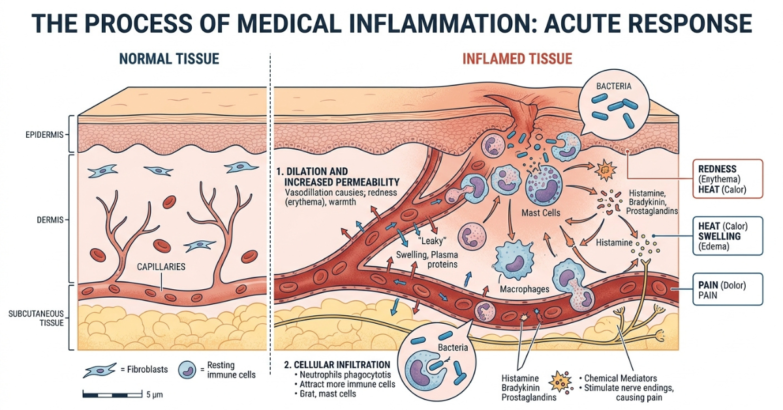
In medicine, inflamed describes a body part or tissue that has developed inflammation. Inflammation is part of the body’s immune response to injury, infection, or other irritants.
Common signs of inflammation include:
- Redness of the affected area
- Swelling around an injury or irritated tissue
- Pain or tenderness
- Warmth in the affected area
- Reduced movement or function in some cases
For example:
- The doctor examined her inflamed tonsils.
- His ankle became inflamed after the injury.
- The dentist treated the inflamed gums.
- The skin around the wound looked red and inflamed.
In these sentences, inflamed describes a physical condition. It is the standard and preferred word for medical writing and everyday discussions about inflammation.
2. Inflamed in an Emotional Context
The word can also describe feelings or situations that have become more intense, especially anger, hostility, resentment, or disagreement.
For example:
- The politician’s remarks inflamed public anger.
- Their disagreement inflamed an already tense situation.
- The article inflamed tensions between the two groups.
- His careless comments inflamed the argument rather than resolving it.
In this context, inflamed suggests that an existing emotion or conflict has become stronger or more difficult to control.
What Does Enflamed Mean?
Enflamed is a less common variant associated with the verb enflame. It generally means to arouse, intensify, or excite a strong feeling, passion, or reaction.
The word is most often encountered in literary, expressive, or figurative writing. Although it may occasionally be used in a physical sense, inflamed is much more conventional in medical and everyday contexts.
For example:
- The speech enflamed the crowd’s passion.
- Their rivalry enflamed an already bitter dispute.
- The dramatic announcement enflamed public excitement.
These examples use enflamed to emphasize an increase in emotional intensity.
In contemporary English, however, many writers would choose inflamed or another more familiar verb, such as intensified, heightened, or stirred, depending on the sentence.
Is Enflamed a Real Word?
Yes. Enflamed is a recognized word formed from enflame. It is not simply a misspelling of inflamed.
Nevertheless, being a valid word does not mean it is the best choice in every situation. The context, intended meaning, and expectations of your audience all matter.
If you are writing a medical report, school assignment, professional email, or general informational article, inflamed will usually be the safer choice.
Enflamed vs Inflamed: Key Differences
Although the words overlap in meaning, their frequency and typical usage differ.
| Feature |
Inflamed |
Enflamed |
| Base verb |
Inflame |
Enflame |
| Commonness |
Widely used |
Less common |
| Medical writing |
Standard choice |
Unusual |
| Emotional writing |
Common and natural |
Possible, often more literary |
| Describes swelling or irritation |
Yes |
Not the usual choice |
| Describes intensified feelings |
Yes |
Yes |
The most important point is that inflamed is the established everyday term for physical inflammation. Both forms can convey heightened emotions, but inflamed is generally more familiar and versatile in modern English.
When Should You Use Inflamed Instead of Enflamed?
Choosing the right word becomes easier when you consider what you are describing.
Use Inflamed for Medical Conditions
Whenever you refer to swelling, redness, irritated tissue, or a diagnosed inflammatory condition, choose inflamed.
Correct examples:
- The patient has an inflamed joint.
- The doctor prescribed treatment for the inflamed skin.
- Her eyes were inflamed because of irritation.
Avoid replacing inflamed with enflamed in these sentences. Although readers might understand your intended meaning, the alternative sounds unusual in standard medical English.
Use Inflamed for Anger and Conflict
Inflamed is also a natural choice when discussing arguments, public reactions, political disputes, or interpersonal tension.
Examples:
- The rumor inflamed public anger.
- The accusation inflamed tensions between the neighbors.
- The decision inflamed an already heated debate.
These sentences are clear, direct, and suitable for both formal and informal writing.
Use Enflamed for a Deliberate Literary Effect
You may encounter enflamed in expressive writing, particularly when an author wants to emphasize heightened passion or emotional intensity.
For example:
- The poet described an enflamed heart consumed by longing.
This is a literary use rather than a standard everyday expression. In ordinary prose, a heart inflamed by longing would sound more familiar to most readers.
When in doubt, choose inflamed unless you have a specific stylistic reason to use enflamed.
Inflamed vs Enflamed: Example Sentences
Comparing examples side by side can make the distinction easier to remember.
Physical Examples
Correct and natural:
- The doctor found that the tissue was inflamed.
- Her inflamed gums bled when she brushed her teeth.
- The injured finger became swollen and inflamed.
Less conventional:
- The doctor found that the tissue was enflamed.
The last sentence is not the normal way to describe a medical condition. Use inflamed instead.
Emotional Examples
Both forms may be understood in figurative writing, but inflamed is usually the more natural choice.
| Sentence |
Preferred wording |
| His remarks made everyone angrier. |
His remarks inflamed everyone’s anger. |
| The dispute became more intense. |
The dispute was further inflamed. |
| Her passionate speech stirred the audience. |
Her speech enflamed the audience’s passion. |
The final example is possible, but stirred the audience’s passion may sound more natural depending on the writer’s intended tone.
Examples in Everyday Conversation
Here are a few simple ways to use the more common form:
- “My throat is inflamed, so swallowing hurts.”
- “That comment inflamed the argument.”
- “The doctor said the area around the cut was inflamed.”
- “The inflammatory headline inflamed public opinion.”
Notice that the same word can describe both a physical reaction and an increase in emotional intensity. The surrounding words make the intended meaning clear.
Common Mistakes to Avoid
Even confident writers sometimes confuse these terms. The following mistakes are easy to prevent.
1. Treating Enflamed as a Spelling Error
Enflamed is a legitimate word. The issue is not that it is always incorrect; it is that it is less common and may sound unnatural in many contexts.
2. Using Enflamed in Medical Writing
Medical writing favors precise, familiar terminology. Use phrases such as inflamed tissue, inflamed joints, and inflamed gums rather than substituting the less common variant.
3. Assuming the Words Are Completely Interchangeable
The words overlap, especially in figurative language, but they do not have identical usage patterns. A word can be grammatically valid and still be a poor choice for a particular sentence.
4. Confusing Inflamed With Inflammatory
These related words have different grammatical functions.
- Inflamed: Describes something affected by inflammation or a heightened emotional state.
- Inflame: A verb meaning to cause or intensify inflammation, anger, or excitement.
- Inflammatory: An adjective describing something likely to cause irritation or provoke strong reactions.
For example:
- The skin is inflamed.
- The chemical may inflame the skin.
- The speaker made an inflammatory remark.
Understanding these distinctions will help you select the correct form.
Why Does English Have Both Words?
English contains many words with overlapping meanings because its vocabulary developed through different historical influences and word-forming patterns.
Inflame and enflame are examples of closely related forms that have coexisted in English. Both can express the idea of setting something aflame or intensifying a reaction, although their modern usage differs.
Over time, inflame became the dominant form in everyday language, particularly in medical terminology and expressions involving anger or conflict. Enflame remained available but became less common.
This is why modern dictionaries may recognize both words while contemporary writing strongly favors one in particular situations. Dictionary validity and common usage are related, but they are not exactly the same thing.
Frequently Asked Questions
1. Is enflamed or inflamed correct?
Both are valid English words, but inflamed is more common and generally preferred. It is the standard choice for medical conditions and is also widely used to describe heightened emotions or conflict.
2. Is enflamed a misspelling of inflamed?
No. Enflamed is a legitimate variant formed from enflame. However, it is less frequently used, so inflamed is usually the better choice in modern everyday writing.
3. What does inflamed mean in simple words?
Inflamed means affected by inflammation, such as swelling or irritation, or made more intense in an emotional sense. For instance, an inflamed knee may be swollen, while inflamed anger means anger that has grown stronger.
4. Can enflamed be used to describe skin?
Although the word may be understood in a physical sense, inflamed skin is the standard expression. Use inflamed when discussing irritation, swelling, redness, or other signs of inflammation.
5. What is the difference between inflamed and inflammatory?
Inflamed describes something that is already affected by inflammation or heightened emotion. Inflammatory describes something that causes or is likely to provoke a reaction, such as an inflammatory statement or an inflammatory skin response.
6. Is inflamed only used in medical contexts?
No. The word is common in both physical and figurative contexts. It can describe inflamed tissue, but it can also describe anger, tensions, passions, and disputes that have become more intense.
7. What is the past tense of inflame?
The past tense of inflame is inflamed. For example, “The remark inflamed the situation.” The past tense of enflame is enflamed, as in “The speech enflamed their passions.”
8. What is a synonym for inflamed?
The best synonym depends on the context.
- Medical: Irritated, swollen, or affected by inflammation.
- Emotional: Aggravated, intensified, heightened, or provoked.
- Literary: Aroused, stirred, or kindled.
These words are not perfect substitutes in every sentence, so choose one that preserves your intended meaning.
Conclusion
The difference between enflamed vs inflamed is mainly a matter of common usage and context. Both are legitimate words, but inflamed is the more familiar and widely accepted choice in contemporary English.
Use inflamed when describing medical conditions such as swollen gums, irritated skin, or inflamed joints. It is also an excellent choice for describing anger, tension, or conflict that has become more intense. Reserve enflamed for situations where its less common, more literary tone suits your writing.
The simplest rule to remember is this: When you are unsure, use inflamed. It is clear, natural, and appropriate for most everyday, academic, and professional writing.
For more helpful explanations of confusing English words, explore related grammar guides and word comparisons to strengthen your vocabulary and write with greater confidence.